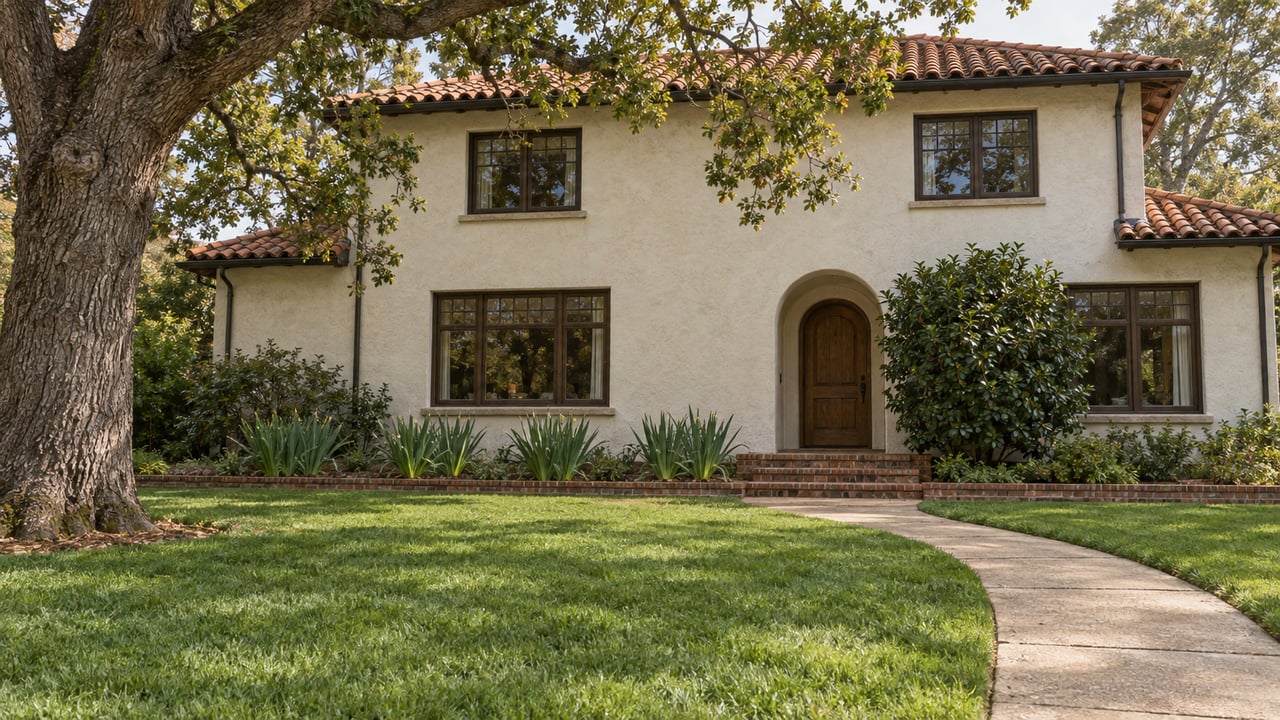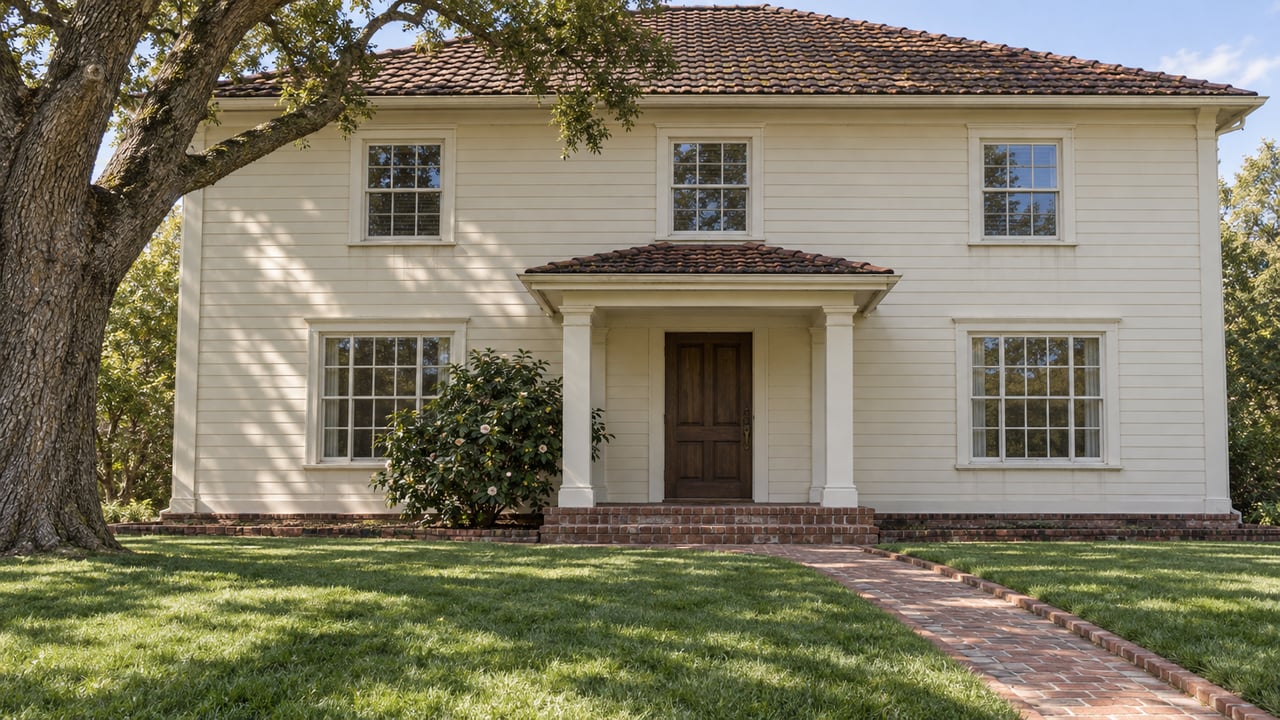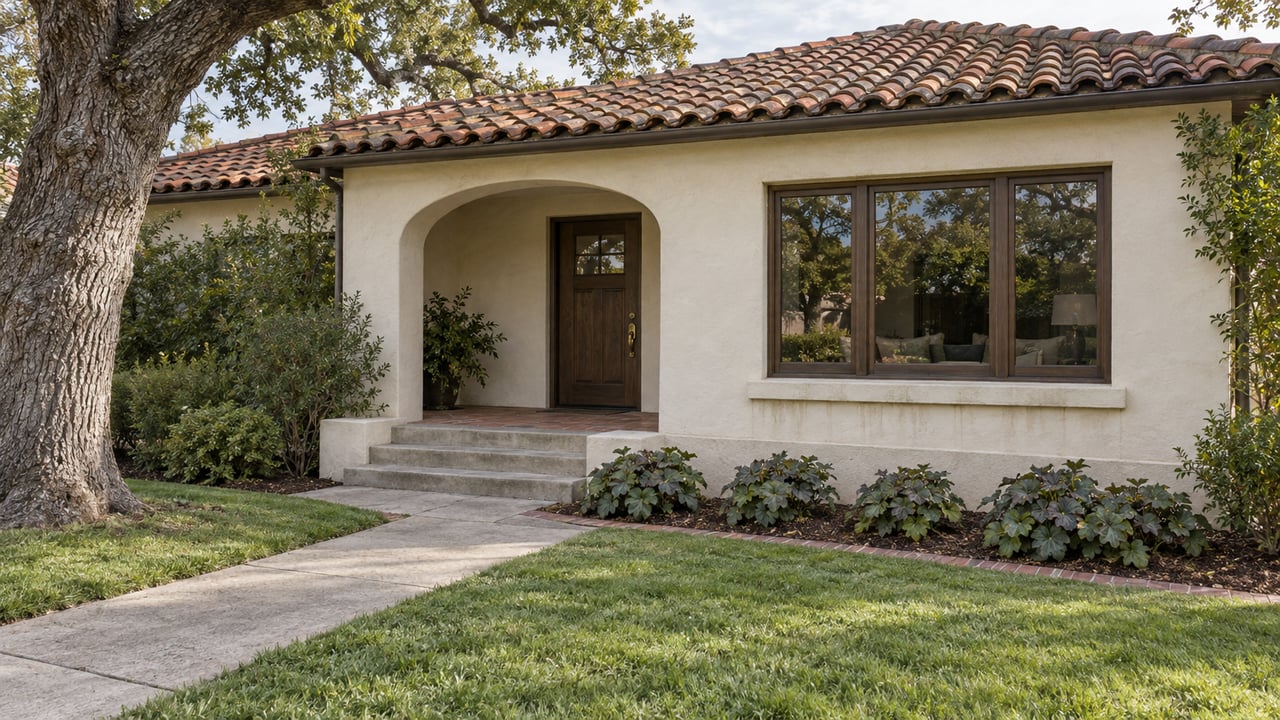
KCRA reported in November 2025 that City crews were booked out two and a half years for non-emergency thinning.
That queue shows a timing problem built into a lot of East Sacramento homes. The tree is the City's, but the insurer asks the owner to clear the roof, and those two schedules don't line up. When an insurer's deadline arrives before the City's crew does, the legal option whose timing the owner controls is a City permit for pruning the owner arranges.
The planter strip decides whose tree it is
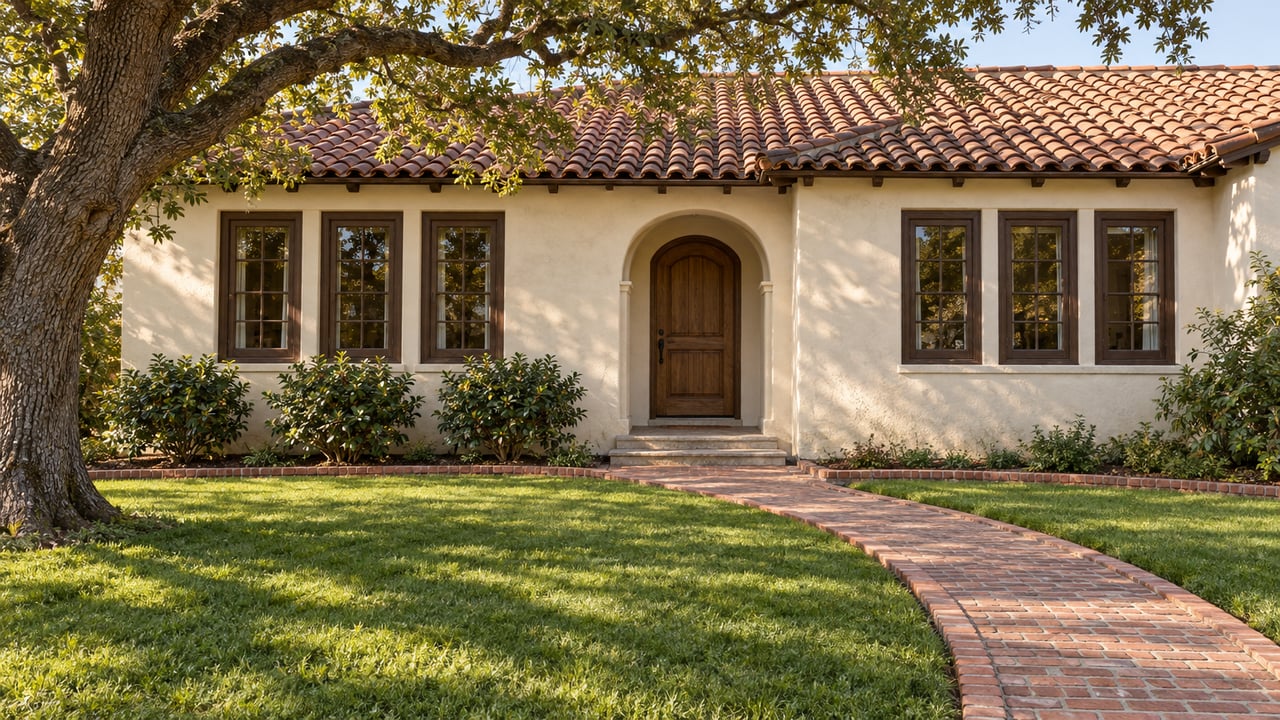
Sacramento City Code defines a "City tree" by where its trunk stands, measured four and a half feet above the ground. If the trunk is partly or fully in the public right-of-way, including a street, sidewalk, park strip or mow strip, the City owns it. On streets where the biggest trees grow between the sidewalk and the curb, the tree shading the front of the house is often a City asset.
Ownership gives the City the pruning. Urban Forestry handles public trees, and the City's tree FAQ says residents can't trim a City street tree without a permit. The adjacent owner still has duties under the code, which include watering unpaved right-of-way areas, keeping them free of weeds and obstructions, and clearing leaves and debris that fall from City trees. So the owner rakes the leaves and the City cuts the branches.
Why the City's queue runs long
The City has described its pruning schedule three ways. The Urban Forestry FAQ says public trees are pruned on a cycle of about five years. The statement the City gave KCRA said the proactive cycle "typically takes five to seven years." The approved FY2026/27 budget calls a cycle of under seven years a goal, and says staff and contractors need to prune 890 trees a month on average to meet it.
The tree counts don't match either. The City told KCRA it maintains more than 100,000 trees in streets and parks. The budget refers to 75,000-plus public trees.
The budget does say when the trouble began. It reports that "beginning in FY20 a lack of staffing has created a backlog for trees being pruned." The New Year's Day storm in 2023 made it worse. Councilmember Phil Pluckebaum told KCRA that West Coast Arborists brought in 1,400 people to clear the streets, "but it also cleared our budget."
The budget tracks one measure of progress:
| Fiscal year | Share of tree inventory pruned per annual cycle | Status |
|---|---|---|
| FY23 | 58% | Actual |
| FY24 | 60% | Actual |
| FY25 | 78% | Actual |
| FY26 | 80% | Estimate |
| FY27 | 90% | Target |
The numbers have risen, which fits what the City told KCRA in 2025: new hires and more contract work had "accelerated pruning efforts and begun to reduce the backlog." In June 2025, the Council took up a two-year West Coast Arborists pruning contract capped at $4 million. The FY2026/27 budget adds $500,000 for Urban Forestry services and supplies from the Landscaping and Lighting fund. It also moves Tree Pruner II staffing from 9 to 10 positions, while the trainee slot goes from 1 to 0.
Larger new revenue isn't on the way soon. Pluckebaum told KCRA it would "probably" take another tax measure and that the City was "looking at budget cuts for the next three years." According to the City Clerk, no City of Sacramento measure qualified for the November 3, 2026 ballot. The City's Urban Forest Plan, adopted unanimously in June 2025, aims for 35% citywide canopy by 2045. KCRA reported that meeting the plan could cost an extra $12 million a year. The number of trees the City maintains is set to grow faster than the funding behind it.
The insurer's clock runs separately
Insurers set their own conditions. CBS13 reported on Land Park homeowners who had received notices about their trees. Liberty Mutual told the station that homeowners must meet its filed underwriting guidelines, "trimming trees that overhang the roof" included.
A local insurance agent told CBS13 that insurers must give 90 to 180 days' notice before canceling, and that some people set the mail aside until it is too late.
That notice window is measured in months. In 2025, the City's queue for non-emergency requests was measured in years. These reports are anecdotes about specific insurers, and they don't establish a California-wide rule. They do show how the problem arises, because the insurer's request goes to the owner even when the tree belongs to the City.
Two legal ways to clear a City tree
Report it to 311. The City FAQ says a City tree affecting building clearance qualifies for out-of-cycle pruning, with priority for building, right-of-way and safety issues. Requests can go to 311 by phone or by email at [email protected]. The City says non-emergency requests usually get an initial response within 48 hours. The work itself is a separate step, and KCRA confirmed that non-emergency work often took at least a year in 2025. With this route, the City decides when the work happens.
Apply for a City tree permit for work the owner arranges. The City's tree permit application lists a $50 fee to cover arborist costs, billed after processing. The form is undated, so confirm the fee with 311. An owner or authorized agent can apply. The form asks for the tree's species, diameter, the proposed work and the reason. The permit can't be transferred and must stay on site during the work. The City may also ask for an arborist report, owner authorization or proof of compliance with the Contractors State License Board. According to the Urban Forestry permits page, applications generally take about ten business days. The City's tree FAQ says a City arborist reviews the scope of work and the proposed worker's qualifications. The City suggests looking for ISA certification, proof of insurance, references and three bids when choosing a contractor.
With the second route, the owner sets the schedule by lining up a qualified contractor instead of waiting for a City crew. When an insurer's deadline falls before the City's crew is likely to come, the permit is the route the owner can plan around. It's worth asking 311 and the contractor how the cost of the work is handled before choosing it.
Where this shows up in a sale
The tree issue tends to come up at points in a transaction where time is short. A buyer shopping for homeowners coverage during escrow may learn about an underwriting concern for the first time. A seller who has had the same policy for years may never have had the roofline looked at. Neither situation depends on who owns the tree.
So it helps to find out early whether the tree over the roof stands in the planter strip, whether a 311 request is already on file, and whether a City permit has ever been issued for it. Starting either route months before a deadline gives you far more choice than starting it two weeks before closing.
The backyard follows different rules
Trees on private land fall under a separate part of the code. On a lot with a single-unit or duplex home, a tree becomes a "private protected tree" at 32 inches in diameter at standard height. Native Valley Oak, Blue Oak, Interior Live Oak, Coast Live Oak, California Buckeye and California Sycamore are protected at 12 inches. Minor pruning of a protected tree, which means dead branches or cuts under two inches in diameter that total no more than 10% of the crown and roots in a 12-month period, counts as routine maintenance. Topping does not.
Removing a protected tree takes a permit and a replacement plan. On residential lots, the plan calls for one replacement tree per protected tree. Under the code, notice of an approved removal permit is posted for 15 days before it takes effect. The City lists a $298 fee to appeal. A big backyard tree that isn't a listed native and measures under 32 inches is just a private tree. The owner is responsible for it, and these protected-tree rules don't apply.
Quick answers
How do I tell if a tree is a City tree? Look at where the trunk stands four and a half feet above the ground. If any part of it is in the street, sidewalk, park strip or mow strip, the code treats it as a City tree. 311 can confirm.
Can I trim a City tree branch that's touching my roof? Not without an approved City permit, according to the City's FAQ.
Is the backlog over? The FY2026/27 budget still describes a backlog, with 90% of the inventory pruned per annual cycle as its FY27 target. KCRA's one-year-plus wait times were reported in November 2025, when the City also said the backlog was starting to shrink.
If the big tree in front of your house might be the City's and you plan to buy or sell in the next year, it's worth checking its status before an insurer brings it up. Pierre at Caviard Realty Associates can go through your street trees with you during listing prep or buyer due diligence, so the 311 request or permit timeline is planned around your closing. Work with Pierre — Request a neighborhood consultation.
This article is general information, not legal, tax or financial advice. Consult a qualified professional about your situation.