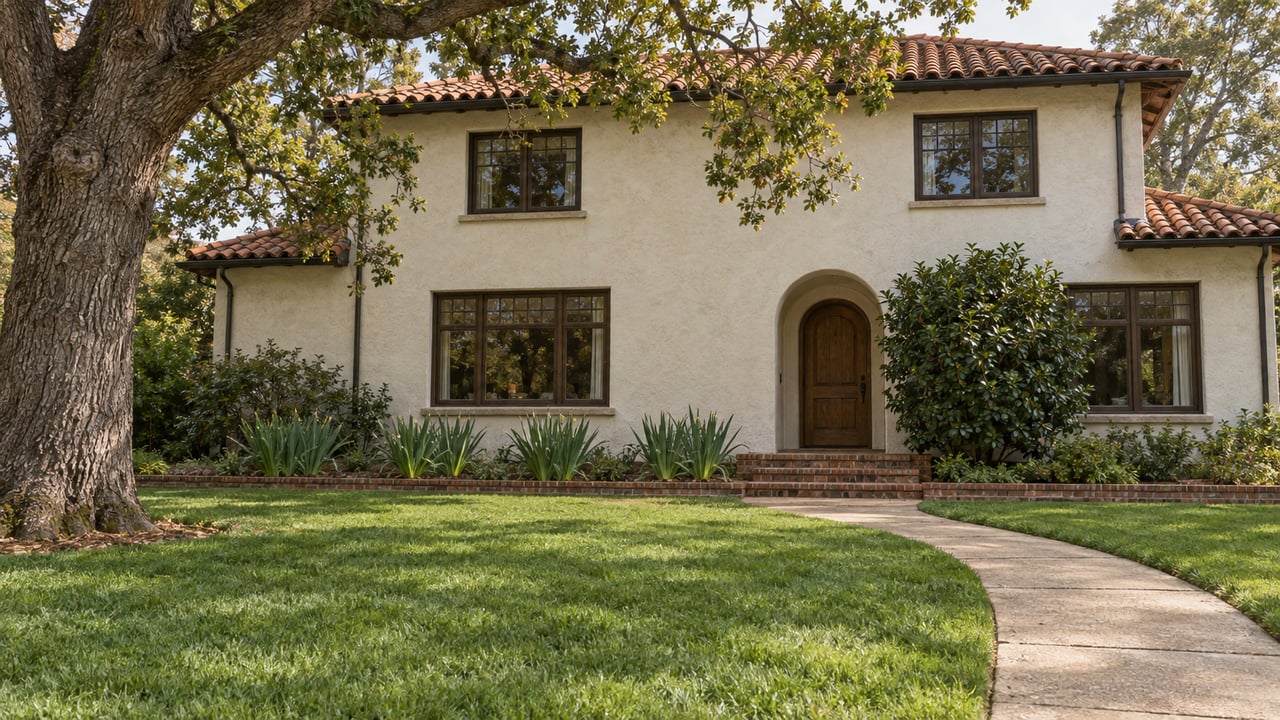
Every home in McKinley Village sits inside two City of Sacramento Mello-Roos districts, and Sacramento County lists only one of them as active. The active one, McKinley Village Community Facilities District No. 2015-04, is the Improvements CFD. It repays bonds that mature on September 1, 2046. The other is the Services CFD, No. 2014-03. It's inactive, and it stays that way only as long as the developer and the homeowners' association keep certain public amenities maintained to City standards.
So in McKinley Village, part of what the HOA does is keep a City tax switched off. Buyers comparing the Village with the older streets of East Sacramento usually see the HOA dues and the special tax as two separate costs. City records show they're tied together.
Two districts on the same parcels
Both districts were formed in 2015, while the land was still held by its developer. The 2015 staff report for the Improvements CFD explains that, with no registered voters inside the boundary, the election was held among landowners, and there was exactly one. The site had once been Mize's Farm. Its eastern portion was a peach orchard, which was removed in late 2006.
| Improvements CFD No. 2015-04 | Services CFD No. 2014-03 | |
|---|---|---|
| What it pays for | Development fees and public improvements within the right-of-way of the major roads serving the project, plus City administration | Maintenance of parks, drainage-basin and open-space landscaping, and sound-wall repair, if the developer and HOA fall short |
| Starting maximum, FY 2015-16 | $900 to $1,800 per residential unit, by parcel size | $427 per unit |
| How the maximum grows | 2% a year | By CPI, capped at 4% a year |
| County status, 2024-25 listing | A, active | I, inactive |
The active district is still on the books for the current fiscal year. Sacramento County's 2026-2027 Direct Levy List includes code 0707, McKinley Village, described as a Mello-Roos special tax formed to fund public improvements.
What keeps the second tax switched off
The Services CFD exists because of one of the project's conditions of approval. Before the final subdivision map was recorded, the owners had to annex the land into an existing landscape maintenance district "or other financing mechanism acceptable to the City." The City accepted a Mello-Roos district that it could turn on if needed.
On March 24, 2015, the City Council approved Maintenance Agreement No. 2015-0358, which requires the developer and the HOA to maintain the public improvements at or above City standards. The May 2015 report asked the Council to authorize an amended version with Encore McKinley Village, LLC, which clarified who maintains the sewer pump detention facility and capped the HOA's annual financial responsibility for it. The May 12, 2015 City Council report spells out the trigger: "If maintenance of the public improvements falls below the levels outlined in the Maintenance Agreement, the City will levy the special tax and provide maintenance of the public facilities."
In practical terms, the HOA's landscaping crews and sound-wall repairs keep a City tax off every owner's bill. If upkeep fell below the agreement's standards, the City would levy the tax on the County's tax roll and take over the maintenance itself, under a maximum that began at $427 per unit and has been allowed to rise with inflation by up to 4% a year since 2015. This means a buyer reviewing HOA documents is also checking whether the association's maintenance obligations to the City are on track.
The active tax's ceiling is built to rise every year until 2046
The 2015 formation report set out the financing plan for the Improvements CFD. The developer would first use its own funds for the public improvements and development fees, and the City would reimburse it later from bond proceeds, from special taxes collected on a pay-as-you-go basis, or from both. The bonds were sold later than the fall 2015 sale the staff report anticipated. The City sold $8,540,000 of Series 2020 special tax bonds on June 17, 2020.
The bond repayment schedule rises gradually, and the tax ceiling rises with it. The City's debt service schedule, dated March 2, 2026, shows the following totals:
| Bond year ending | Principal due | Total debt service for the bond year |
|---|---|---|
| September 1, 2026 | $160,000 | $478,975.00 |
| September 1, 2036 | $360,000 | $584,200.00 |
| September 1, 2046 | $685,000 | $712,400.00 |
In fiscal year 2025-26, the special tax levy was $528,065.16, spread across 352 homeowner units. All of it was owed by individual homeowners. That averages to about $1,500 per home. Because rates depend on parcel size, any single home's bill can be higher or lower. Payments have been steady. Of the 2024-25 levy, $516,098.11 was collected, and $1,613.37 was delinquent across two parcels as of June 30, 2025.
The maximum rates follow a fixed formula: $900 to $1,800 per unit in FY 2015-16, increasing 2% each year. Applying that formula through FY 2026-27 puts the ceiling at roughly $1,119 to $2,238 per unit. That figure is calculated from the formula and isn't a number the City has published, and the City cautions in its maximum special tax report that actual levies can differ from the maximums. The 2015 levy ordinance keeps the tax in place for each fiscal year until collection stops and the City records a notice of cessation.
How the tax shows up when a home sells
All of this matters most on two documents at closing: the tax bill and the disclosure packet. Here is how each piece comes into play during a McKinley Village sale.
- The parcel's own tax bill. Mello-Roos taxes are collected on Sacramento County's secured property tax roll, on the same schedule as regular property taxes. The neighborhood average of about $1,500 is useful for comparing areas, but the specific home's bill is the number to rely on.
- The City's Notice of Special Tax. Under Government Code §53340.2, the designated local agency must provide this notice within five working days of a request. The statutory form covers the maximum tax, how long it lasts, the facilities or services it funds, and the buyer's window to cancel.
- The seller's good-faith effort. Civil Code §1102.6b requires sellers in the transfers it covers to make a good-faith effort to get that notice and give it to the buyer. Original buyers from the builder received a separate subdivider's notice under Government Code §53341.5.
- The HOA's maintenance obligations. Because the Services CFD switches on only if upkeep of the public improvements falls below City standards, the association's maintenance obligations under Agreement No. 2015-0358 are directly connected to the tax bill.
- The partial prepayment rule. On September 4, 2018, the City Council adopted Resolution No. 2018-0363. It lets the special tax obligations of multiple parcels be pooled before the amount is rounded up to redeem bonds in $5,000 increments for a partial prepayment. The City Treasurer's office handles those calculations.
This is general information, not legal, tax or financial advice. Please confirm how these rules apply to your property with a real estate attorney, tax professional or the City's district administrator.
Where the total tax burden stands
When the Improvements CFD was formed, City policy capped a residential parcel's total tax and assessment burden at 2% of its market value. Staff expected McKinley Village to come in under 1.5%, counting regular property taxes and all special taxes and assessments. As of March 1, 2026, the district's own bonds came to $8,005,000. That's 3.00% of the district's $267,199,889 assessed value for 2025-26. Adding the overlapping debt, including Sacramento Unified School District and Los Rios Community College District general obligation bonds, brings the total to 5.70%.
Quick answers
Do McKinley Village owners pay the $427 services tax today?
The County's 2024-25 special assessment listing shows the Services CFD as inactive. Its formation report says the City levies it only if the developer and HOA's maintenance falls below the levels set in the maintenance agreement.
Does the Improvements tax end in 2046?
The Series 2020 bonds have a final maturity of September 1, 2046. Under the levy ordinance, the tax continues until collection stops and the City records a notice of cessation.
What did the bonds pay for?
The 2015 formation report limits bond proceeds and special taxes to reimbursing the developer for development fees and public improvements along the major roads serving the project, plus the City's administrative costs.
Pierre has represented approximately 95% of all home sales in McKinley Village, so the special tax line and the HOA's maintenance file are part of how he prepares every listing and every offer here. If you're buying or selling in the Village and want to know what a specific parcel's tax bill and disclosures will show before you commit, Caviard Realty Associates can go through those documents with you. Work with Pierre and request a neighborhood consultation.