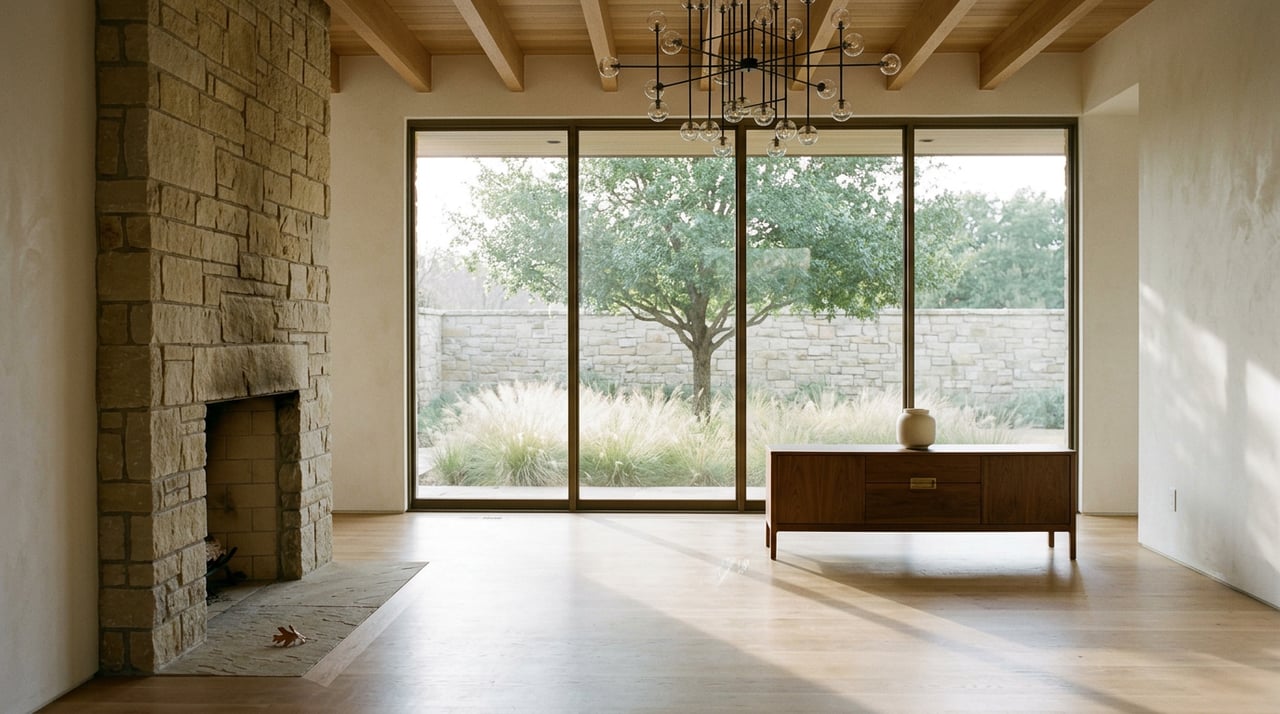
Search "Land Park homes for sale" and the portals hand you one story: tree-lined streets, Craftsman bungalows from the 1920s and 1930s, a median price hovering in the $800,000s. Drive four blocks south of William Land Park itself, though, and the story stops matching the houses in front of you. Flat or gently gabled roofs. Walls of glass facing the backyard instead of the street. Post and beam construction with no attic to speak of. These are not renovated Tudors. They are Eichlers, and as of a little over two years ago, they carry a legal identity the rest of "Land Park" does not share.
On May 21, 2024, the Sacramento City Council designated the South Land Park Hills (Eichler) Historic District, the city's first Mid-Century Modern historic district and its first residential historic district outside the downtown grid. That single vote created a second rulebook inside a neighborhood most buyers still treat as one product.
The Split That Only Recently Became Official
The district sits on three streets, South Land Park Drive, Fordham Way, and Oakridge Way, with 47th Avenue marking the northern edge and Silver Lake Drive the southern one. Inside that boundary, developer Joseph Eichler built roughly 60 homes between 1955 and 1956, designed by the architecture firm Jones & Emmons, which was responsible for roughly 5,000 of Eichler's 11,000 California homes over an 18-year partnership. Of those 60, the city's designation lists 49 as contributing resources and 11 as non-contributing, meaning enough of their original design has been altered over the decades that they no longer count toward the district's historic character even though they sit inside its boundary.
That distinction matters more than it sounds like it should when you are evaluating potential exterior work.
What Design Review Actually Changes for an Owner
Historic district status is not a plaque. It is a process. In practice, exterior work on a contributing property involves preservation review. The nomination itself was presented to that commission by Assistant Preservation Planner Henry Feuss in April 2024, a month before the council vote made it official.
For a buyer touring both a 1930s Tudor near the park and a 1955 Eichler on Fordham Way, that difference rarely shows up in the listing description. It shows up later, when a contractor pulls a permit and the timeline stretches by weeks the buyer did not budget for. If you're evaluating a specific address inside this pocket, the practical move is simple: ask your agent or the city's preservation office directly whether the parcel is a contributing resource before you assume any exterior renovation plan is a straightforward permit.
Why the Architecture Never Matched the Rest of the Neighborhood
The split is not new. It is only newly formal. Eichler had never built outside the Bay Area before 1955, and Sacramento was where he tried it first. The tract was originally advertised as a 143-home development, and roughly 60 homes were built. Early homeowner accounts describe flat roofs and floor to ceiling glass as a hard sell in a city that was not primed for that look yet. The street the city named after him, Eichler Street, sits nearby and never got a single Eichler home built on it, a detail every local Eichler enthusiast seems to know and every newcomer to the neighborhood does not.
The homes that did get built originally sold for between $17,750 and $21,000. The city's designation also credits Eichler as a builder who constructed homes without racial covenants at a time when those covenants were standard practice in much of the industry, a detail the city highlighted directly in its announcement of the district.
Getting from that history to a legal designation took years of unpaid work. Sacramento Modern, a nonprofit dedicated to the region's mid-century architecture, spent close to a decade turning a 2016 to 2017 architectural survey into an actual nomination, organizing a volunteer committee that walked the tract house by house to determine which of the 60 originals still retained enough integrity to count as contributing.
Two Products, One Search Term
Here is where the numbers stop cooperating with each other. As of August 2026, Land Park's median listing price sat at $850,000, with homes moving in a median of 24 days on the market, according to Movoto's tracking of the broader neighborhood. That figure describes the whole search area, Craftsman bungalows facing the park included, and it is the number most buyers see first.
The Eichler pocket cannot produce a comparable median because there are not enough of them to build one. With only 49 contributing homes and turnover that is rare by design, a single sale can swing any per-square-foot comparison more than a normal market ever would. One illustration: in October 2025, an Eichler on the market listed at $799,900, described by local mid-century enthusiasts as one of the best-preserved examples in the tract. That is a single data point, not a trend line, and treating it as a stand-in for the neighborhood's median would misread what's actually happening on the ground.
| Historic Land Park core | South Land Park Hills (Eichler) Historic District | |
|---|---|---|
| Typical construction era | 1920s to 1940s | 1955 to 1956 |
| Architectural style | Craftsman, Tudor Revival | Mid-century modern, post and beam |
| Exterior alteration path | Standard city permitting | Historic preservation review for contributing properties |
| Comparable sales pool | Broad, active | Extremely thin, roughly 49 contributing homes |
| Buyer profile | General move-up and lifestyle buyers | Mid-century design enthusiasts, often architecture-forward buyers |
The practical takeaway is not that one pocket is better than the other. It is that a median price built from both products at once tells you less than it appears to. If you are comparing Land Park to another Sacramento neighborhood using a single number from a portal, you are quietly averaging a 1930s bungalow market against a district with 49 contributing homes and its own review process, and neither side of that average describes the specific house you are about to make an offer on.
Before You Fall for a Listing on These Three Streets
A short checklist if you're seriously considering a home inside the boundary:
- Confirm the parcel sits within the mapped district, bounded by South Land Park Drive, Fordham Way, Oakridge Way, 47th Avenue, and Silver Lake Drive.
- Ask whether the specific home is listed as a contributing or non-contributing resource. That status was determined house by house during the nomination process, not assumed from the boundary alone.
- If it's contributing, ask the city's preservation planning staff what triggers design review before you assume a straightforward permit for exterior work like windows, roofing, or additions.
- Treat any per-square-foot comparison against a specific recent Eichler sale as an anecdote, not a market average, given how few of these homes exist.
- If architectural authenticity matters to you as a buyer, ask what remains original. Some contributing homes have been meticulously restored, others less so, and that variance is part of why 11 of the original 60 didn't make the contributing list at all.
A Few Questions Worth Asking Directly
How can I find out whether the designation affects what I can do inside the house? Confirm the specifics for your address with the city's preservation office rather than assuming either way.
Is South Land Park Hills the same thing as "Land Park" on a listing search? It shows up in the same broad search area, but it is a separate 1955 to 1956 development with its own boundary, its own architectural identity, and now its own review process. Treat it as its own market when you're comparing prices.
Are all 60 original Eichlers protected? No. Forty-nine are listed as contributing resources. The other 11 sit inside the boundary but were altered enough over the decades that they don't count toward the historic designation.
Land Park's reputation was built on tree canopies and Craftsman porches, and that reputation is earned. It just isn't the whole picture on these three streets, and since 2024 that difference comes with paperwork attached.
If you're comparing what your money actually buys across Sacramento's older neighborhoods, including the pricing dynamics we've already broken down for Land Park's broader market, Work with Pierre — Request a neighborhood consultation and get a straight answer on which side of a specific listing's boundary line you're actually standing on.
This article is general information, not legal, tax or financial advice. Consult a qualified professional about your situation.